)

Transformational leadership and the human side of hospitality take centre stage at EHMA conference
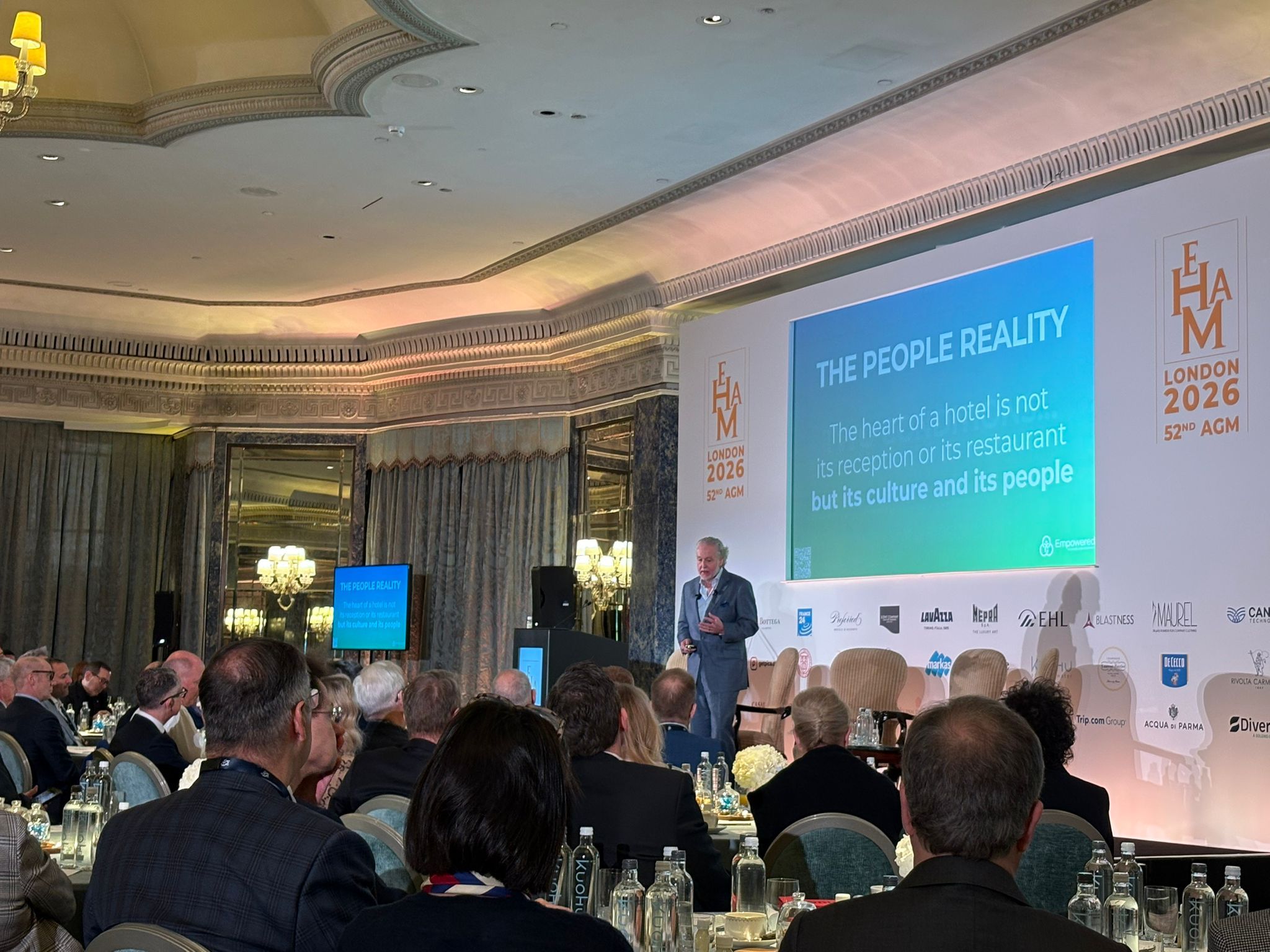
The first session of the European Hotel Managers Association conference explored one of the defining questions facing the hotel sector today: how leadership, culture and human connection will shape the future of hospitality.
Chaired by Professor Dimitrios Buhalis of Bournemouth University, the discussion brought together speakers from across the industry to reflect on the pressures facing hotel teams and the leadership approaches needed to navigate them.
Across the session, a consistent theme emerged. In an industry built on people, success ultimately depends not on systems or strategies but on culture, connection and leadership.
Empowerment and the value of human moments
Stefan Wissenbach, founder of Empowered, opened the session by focusing on the importance of culture in hospitality organisations.
“Performance is never about strategy and systems; it’s about people and culture,” he said.
Wissenbach argued that as technology reshapes the industry, the value of genuine human interaction is only increasing. In a world where digital systems dominate many aspects of daily life, hospitality has a powerful advantage.
“In a digital world, human moments become more premium,” he said. “When connection is being removed from the world, it becomes more valuable.”
For hotels seeking to attract the next generation of talent, he suggested the industry may also need to rethink the language it uses.
“We’re using the wrong words to attract new talent.”
Human resources departments can support organisational culture, he explained, but responsibility ultimately lies with leadership.
“HR can support culture, but it has to be led from the top. Leaders have to embody the culture of their hotel.”
Rethinking hospitality experiences
Jannes Sörensen of Kepler International Hospitality Academy expanded the conversation to look at the wider challenges facing the sector.
Tourist destinations across Europe are becoming busier than ever, he noted, while many hotels continue to struggle with persistent staffing shortages.
“Understaffing, what once felt temporary, is now systematic,” he said. “Hotels have to do more with fewer, less experienced people.”
These pressures are reshaping how hospitality experiences are delivered and perceived. Sörensen spoke about the tension between presence and performance — both in how teams interact with guests and how guests themselves engage with travel experiences.
“Luxury hospitality has become exceptionally good at giving people what they think they want,” he said. “The true value in hospitality has always been in giving people what they need.”
At the same time, he suggested that both guests and staff are becoming less practised at building genuine human connections.
Guests increasingly pursue experiences they believe will make them happy, yet often leave unsatisfied. For hotel leaders, this creates an opportunity to rethink how properties are designed and operated.
The future, he argued, lies in designing hotels around human needs rather than visual optics.
Building resilience in emerging leaders
The session concluded with Marco Truffelli and Dr Jan Ferris presenting the RESILIRĒ Psychological Growth programme, developed in collaboration with EHMA to support the next generation of hospitality leaders.
The initiative focuses on inner development as the foundation for effective leadership, using science-based psychological tools to support both performance and wellbeing.
Workload management remains one of the most significant stressors for hospitality professionals, the speakers noted. Developing resilience and self-compassion can help leaders navigate the pressures of modern hotel management.
“You can’t control problems, but you can control how you react to them,” Ferris explained.
Compassionate leadership was another central theme. Listening to team members as individuals, rather than simply managing numbers, helps create healthier and more effective workplaces.
Sometimes the most effective response to a challenge is not immediate action, but reflection.
“Observing and taking a moment can be better than instantly reacting to problems and challenges,” the speakers said.
Truffelli also emphasised that hospitality leadership often requires navigating competing demands.
“Leadership rarely allows for polarities,” he said. “Leadership challenges are often not solved by choosing a side but by managing the polarities.”
Balancing care with accountability is essential. Without that balance, leadership can lose clarity.
“Leaders need to reflect and not just react, and balance care with compassion. Navigate complexity with clarity and compassion.”
The RESILIRĒ programme, which runs over seven months, offers a cohort of emerging hospitality leaders workshops and coaching designed to strengthen their leadership capabilities through psychological insight and personal development. The initiative forms part of EHMA’s broader commitment to developing future leaders across the hotel industry.
Together, the session’s speakers highlighted a central message for hospitality leaders: in a rapidly changing and increasingly digital world, the industry’s greatest strength remains its people. Cultivating culture, empathy and human connection may prove to be the most important leadership challenge of all.
)
)
)
)
)
)
)
)
)
)
)
)
)
)
)
)
)
)
)
)
)
)
)
)
)
)
)
)
)
)
)
)
)
)
)
)
)
)
)
)
)
)
)