)

Spaces without boundaries: The future of hotel design
Hotel design is moving beyond the bedroom. As the boundaries between travel, work and leisure become less defined, independent hotels are rethinking how their spaces can support different activities, welcome local communities and create a distinctive guest experience.
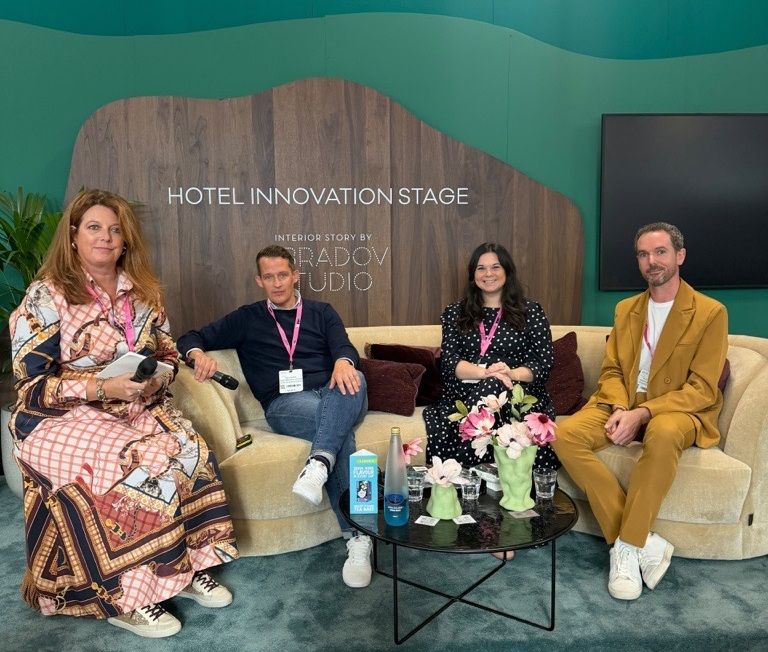
At the Independent Hotel Show’s Innovation Stage, Petra Clayton, Creator & CEO of Custard, moderated a discussion with Ben Harper, CEO of Watergate Bay Hotel, Another Place and SeaSpace; Francesca Toman, Design Director at Ches & Co; and Matt Hulme, Founder and Design Director at Dynargh Design. The session explored how creative ambition, operational insight and an understanding of guest behaviour can shape hotels that work for both their users and their owners.
The Innovation Stage was designed by Obradov Studio and in partnership with Agilisys, Airwave and Aphy.
Designing around lifestyles
One of the central themes was the value of understanding guests through their interests and attitudes, rather than relying solely on demographic categories.
Families, couples, solo travellers and local residents may want many of the same things from a hotel: somewhere comfortable to work, opportunities to be active, relaxed social spaces or a sense of connection with their surroundings. Designing around these shared interests can help a property welcome different audiences while retaining a clear identity.
That requires consideration of the entire guest journey. Bedrooms remain important, but cafés, pools, workspaces and public areas increasingly help define what a hotel offers and how people experience it.
Giving shared spaces a clear purpose
Flexible spaces need more than an open-plan layout. Each area must support the activity it is intended for, with an atmosphere that makes people comfortable using it.
A guest settling down to work has different needs from someone meeting friends or relaxing after a swim. Clearly differentiated zones can accommodate these activities within a shared environment, helping people understand how to use the space.
SeaSpace provided an example of a hotel model designed around regular use by the local community as well as overnight stays. Its café, coworking space, taproom, pool and memberships offer reasons for people to return outside a traditional hotel visit.
This also brings accessibility into focus. If a property aims to welcome the whole community, inclusive design needs to form part of the original brief. The discussion highlighted SeaSpace’s pool hoist as one practical example of that principle.
Bringing operational insight into the creative process
The panel explored the balance between starting with an ambitious vision and ensuring that the finished hotel works day to day.
An initial concept needs room to develop, but General Managers and operational teams should be involved early enough to test how it will function. Storage, cleaning, maintenance, socket locations and guest flow all influence whether a space delivers on its promise.
Their involvement also gives the people responsible for running the hotel a sense of ownership over the design. Operational knowledge can help refine a concept and anticipate problems before they become part of everyday service.
Financial planning is equally fundamental. Establishing a viable budget during the early appraisal stage allows owners to assess design decisions against the wider business plan and return on capital, prioritising the elements most important to the experience.
Creating a feeling guests remember
Distinctive design is about more than attractive interiors or a recognisable photo opportunity. The discussion considered how materials, sensory details, service and the people within a hotel contribute to a coherent feeling.
A memorable space should feel authentic to the property and the experience it offers. Social media can capture that character, but designing solely around a photograph risks overlooking how a space feels and functions during a stay.
The same principle applies to technology. Familiar, intuitive controls can offer a better experience than complex systems that guests struggle to understand or teams find difficult to maintain. Technology earns its place when it makes using the hotel easier.
Continuing to learn after opening
The session also challenged the idea that design is complete when a hotel opens.
Watching how guests, local users and staff interact with a space can reveal opportunities for improvement. Small, targeted adjustments allow hotels to respond to actual behaviour, rather than waiting for a major refurbishment.
For independent hoteliers, the discussion offered a practical approach: establish a clear identity, give each space a purpose and keep learning from the people who use it. The future of hotel design depends as much on that ongoing attention as on the original creative vision.
)
)
)
)
)
)
)
)
)
)
)
)
)
)
)
)
)
)
)
)
)
)
)
)
)
)
)
)
)
)
)
)
)
)
)
)
)
)
)
)
)
)
)
)