)

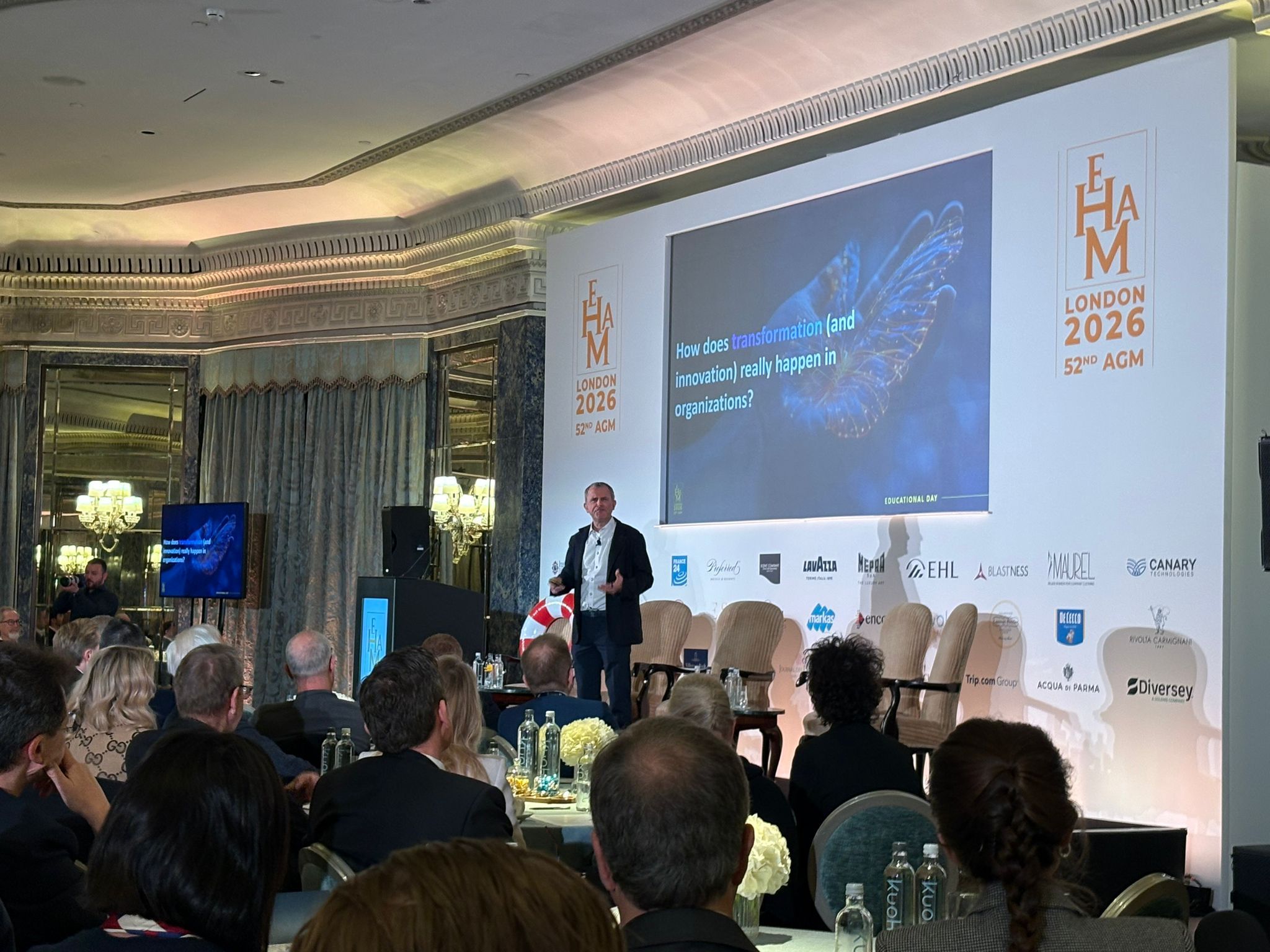
Artificial intelligence is already reshaping how hotels operate, but the scale of change still to come was a central theme of the European Hotel Managers Association conference session on smart hospitality.
Chaired by Professor Dimitrios Buhalis of Bournemouth University, the discussion explored how AI, robotics and emerging digital technologies are set to transform everything from hotel operations to guest journeys and leadership itself.
While the opportunities are vast, speakers emphasised that the successful adoption of AI will depend not only on technology, but on leadership, organisational culture and a continued focus on human connection.
From traditional AI to agentic systems
Opening the session, Professor Buhalis outlined how the industry is moving from traditional AI tools towards more advanced “agentic AI” systems capable of acting autonomously and making decisions.
This shift, he explained, will reshape almost every role within hospitality organisations.
“AI will transform every role in hospitality organisations, because of intelligence and decision-making,” he said.
Airlines are already demonstrating what this transformation could look like, having invested heavily in AI to improve marketing, operational efficiency and customer service. Hospitality, he suggested, should follow their lead.
Looking further ahead, even business transactions may evolve as intelligent systems begin negotiating on behalf of companies.
“Machines negotiating with machines” could become part of the commercial landscape.
For hotel leaders, the key message was clear: engage with the technology early and invest time in understanding it.
Hoteliers must embrace change and actively learn about the systems that will shape the future of their businesses.
Leading technology transformation
Phil Le Brun, author of The Octopus Organisation, focused on the leadership challenges involved in implementing technological change.
Being technically skilled is not enough, he argued. Successful technology leaders must also understand people and organisational behaviour.
“Being a good technologist isn’t enough; you need to be a good psychologist and take people on the journey with you.”
For organisations implementing new technology, clarity about the problem being solved is essential, as is ownership among the people responsible for delivering change. Leaders must also remain curious about the possibilities that new technologies create.
Successful transformation starts with a clear and inspiring purpose that is communicated openly and consistently.
Le Brun also warned against overly slow decision-making around technology investments. Organisations should identify who has end-to-end accountability for technology decisions and ensure someone is responsible for delivering value from those investments.
Curiosity, he argued, is one of the most important leadership traits in a rapidly changing digital environment.
“What does the customer want? Leaders that stop asking questions cannot lead.”
Rather than expecting leaders to always have the answers, organisations should prioritise experimentation, learning and curiosity.
Integrating learning into everyday work, hiring for learning agility and role-modelling curiosity are all essential for organisations that want to keep pace with technological change.
AI’s impact across the hotel business
Professor Alessandro Inversini of EHL explored how artificial intelligence is already influencing traveller behaviour and hotel operations.
Travellers are increasingly using AI tools to research and plan trips, creating new expectations around speed, convenience and personalisation.
Within hotels, the most significant AI applications are emerging in guest experience, human resources, operations, data infrastructure and channel management.
From personalised recommendations to automating routine tasks, AI has the potential to transform the efficiency of hotel teams while improving the guest journey.
One of its greatest benefits may be freeing employees from repetitive administrative work, allowing them to focus on more meaningful interactions with guests.
Guests themselves are also showing strong preferences for digital tools when it comes to tasks such as check-in or modifying bookings.
Despite these rapid advances, Inversini reminded delegates that AI technology is still in its early stages.
“We’re experiencing the worst AI will be, as it’s in its infancy.”
Large organisations are currently leading the way in scaling AI solutions beyond pilot projects, but the wider industry will follow as tools mature and best practice becomes clearer.
For the sector to build trust, he argued, the industry must develop strong human-centric case studies that demonstrate the real value of AI.
The goal should be clear: automation without depersonalisation.
“AI should extend, not replace.”
Future hospitality leaders will therefore need to combine technological fluency with emotional intelligence.
Technology, data and human oversight
Tony Matharu, founder and chairman of Integrity International Group, reinforced the importance of balancing technological advancement with human judgement.
Technology and data are powerful tools, he said, but they must remain aids to human decision-making rather than replacements for it.
Human and moral oversight will play an essential role as AI becomes more embedded in business processes.
A crucial starting point for many organisations is understanding their own data — what information they hold, where it is stored and how it is protected.
Matharu also encouraged hoteliers to examine whether their digital booking journeys remain fragmented, highlighting how seamless customer experiences will become increasingly important.
Looking to the future, advances such as driverless transport and fully automated manufacturing environments suggest how dramatically the world of work may evolve.
Within hospitality, however, the purpose of AI should remain clear.
By speeding up routine processes and administrative tasks, technology can free hotel teams to spend more time building meaningful relationships with guests.
And in an industry defined by service and experience, those human moments will remain hospitality’s greatest strength.
)
)
)
)
)
)
)
)
)
)
)
)
)
)
)
)
)
)
)
)
)
)
)
)
)
)
)
)
)
)
)
)
)
)
)
)
)
)
)
)
)
)
)