)

The next visitor to your site might not be a human: preparing hotels for agentic AI
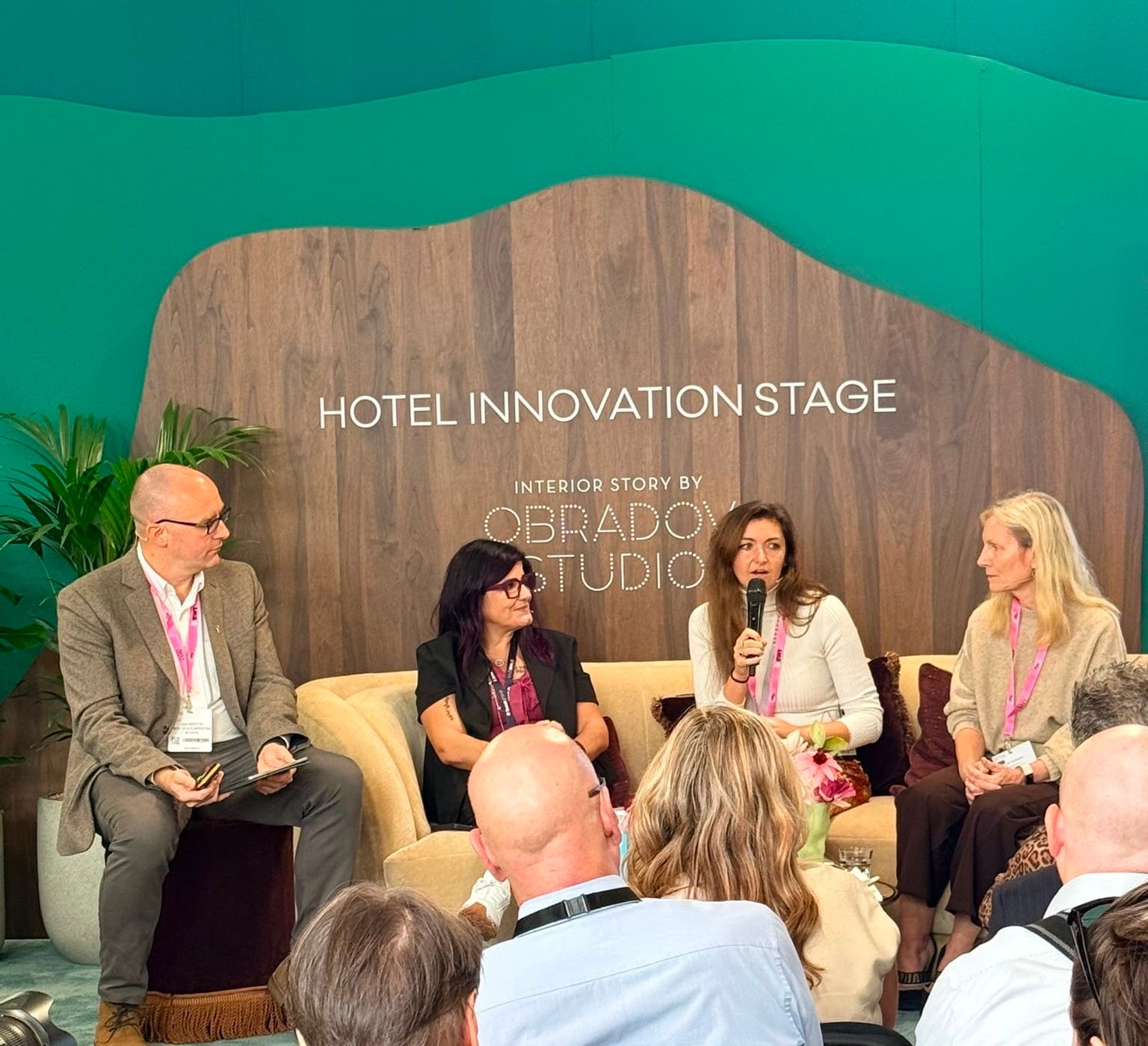
How can independent hotels prepare for AI agents searching for and booking stays? At the Independent Hotel Show, Sam Weston of 80 DAYS joined Alessandra Leoni of Focus on Hospitality by Focus Group and Next Wave Hospitality, Anna Wolfram of Grantley Hall and Judi Blakeburn, Advisor to Watergate Bay Hotel, to explore website readiness, direct bookings and preserving the personal connection with guests.
A traveller asks an AI assistant to find a hotel, compare the options and make a booking. Your property fits the brief, but a confusing website or complicated booking journey prevents the agent from completing the reservation. Where does that potential guest go next?
At the Independent Hotel Show, a session on the Innovation Stage, in partnership with eviivo and designed by Obradov Studio, explored what the rise of agentic AI could mean for independent hotels, from securing direct bookings to maintaining the personal connections that distinguish their guest experience.
Sponsored by Focus on Hospitality, ‘The next visitor to your site might not be a human’ was moderated by Sam Weston, Head of AI & Marketing at 80 DAYS. He was joined by Alessandra Leoni, Head of Hospitality at Focus on Hospitality by Focus Group and Director & Founder of Next Wave Hospitality; Anna Wolfram, Head of Marketing at Grantley Hall; and Judi Blakeburn, Advisor at Watergate Bay Hotel.
Put your booking journey to the test
A practical message emerged from the discussion: hoteliers should start testing how AI agents interact with their websites.
That means setting realistic tasks, such as finding a room for particular dates, checking whether an amenity is available, adding breakfast and progressing towards payment. These exercises can reveal obstacles that may also make booking harder for human guests.
The session highlighted how literally agents can interpret website information. Ambiguous buttons, inconsistent descriptions and missing details can interrupt a journey, while pop-ups, cookie messages and verification steps can create further barriers.
Clear calls to action matter. A straightforward “Book now” gives an agent a more explicit instruction than creative wording whose meaning depends on context.
Testing also needs to be repeated. Agents can respond differently to the same request, so a single successful attempt does not establish that a booking journey works reliably.
Look beyond the hotel website
A well-presented website is only part of the process. The booking engine must also allow an agent to find accurate rates and availability, understand conditions and complete the necessary actions.
The discussion encouraged hotels to ask their technology providers how they are preparing for agent-led bookings and what improvements may be needed.
Accuracy across connected systems is equally important. Amenities, offers, promotional codes, closure dates and FAQs need to be consistent and easy to find. A small discrepancy can become a significant obstacle when an agent cannot resolve it.
For hotels focused on growing direct bookings, these issues have a commercial implication: friction on the hotel’s own website may lead an agent to seek an alternative route through an online travel agency.
Make your hotel’s distinctive offer discoverable
Being easy to book does not automatically make a hotel easy to recommend.
The session explored the importance of clear, accurate information across a property’s website, social channels and relevant third-party sources. Hotels need to make their distinctive qualities easy for AI tools to identify, whether that is their location, dining, design or particular guest experiences.
Repeating searches and reviewing the sources cited can help teams understand how their hotel is being represented and where information may need updating.
Keep the guest relationship in view
An efficient booking process raises another question: what happens to the experiences and conversations an agent might bypass?
Room upgrades, dining options and other extras may receive less attention during an automated transaction. Hotels should make relevant experiences discoverable during booking, while considering how personal follow-up can help guests understand the options available.
The discussion recognised that adoption is likely to vary. A business traveller arranging a functional overnight stay may approach agent-led booking differently from someone choosing a luxury leisure break.
Hotels therefore need to assess the channel against their own guests, brand and commercial priorities, with clear objectives and appropriate attention to data ownership, security and governance.
Independent hotels’ ability to make decisions and implement changes quickly was highlighted as an advantage. Testing a realistic booking task, correcting unclear information and opening a conversation with the booking engine provider offer practical starting points for understanding how this emerging channel could work for their business.
)
)
)
)
)
)
)
)
)
)
)
)
)
)
)
)
)
)
)
)
)
)
)
)
)
)
)
)
)
)
)
)
)
)
)
)
)
)
)
)
)
)
)
)