)

The next generation of travellers is here: Are you ready?
Hoteliers from Alexandra Hotel and Restaurant, Grantley Hall and Clermont Hotel Group explore how changing guest expectations, AI and personalised experiences are shaping the next generation of hotel stays.
From AI-powered discovery to bespoke experiences, guest expectations are evolving. But for hoteliers, keeping pace starts with understanding what makes their property special — and why guests choose to stay.
The next generation of travellers is already influencing how hotels market themselves, deliver service and develop new experiences. Yet responding to these changes involves much more than attracting younger guests.
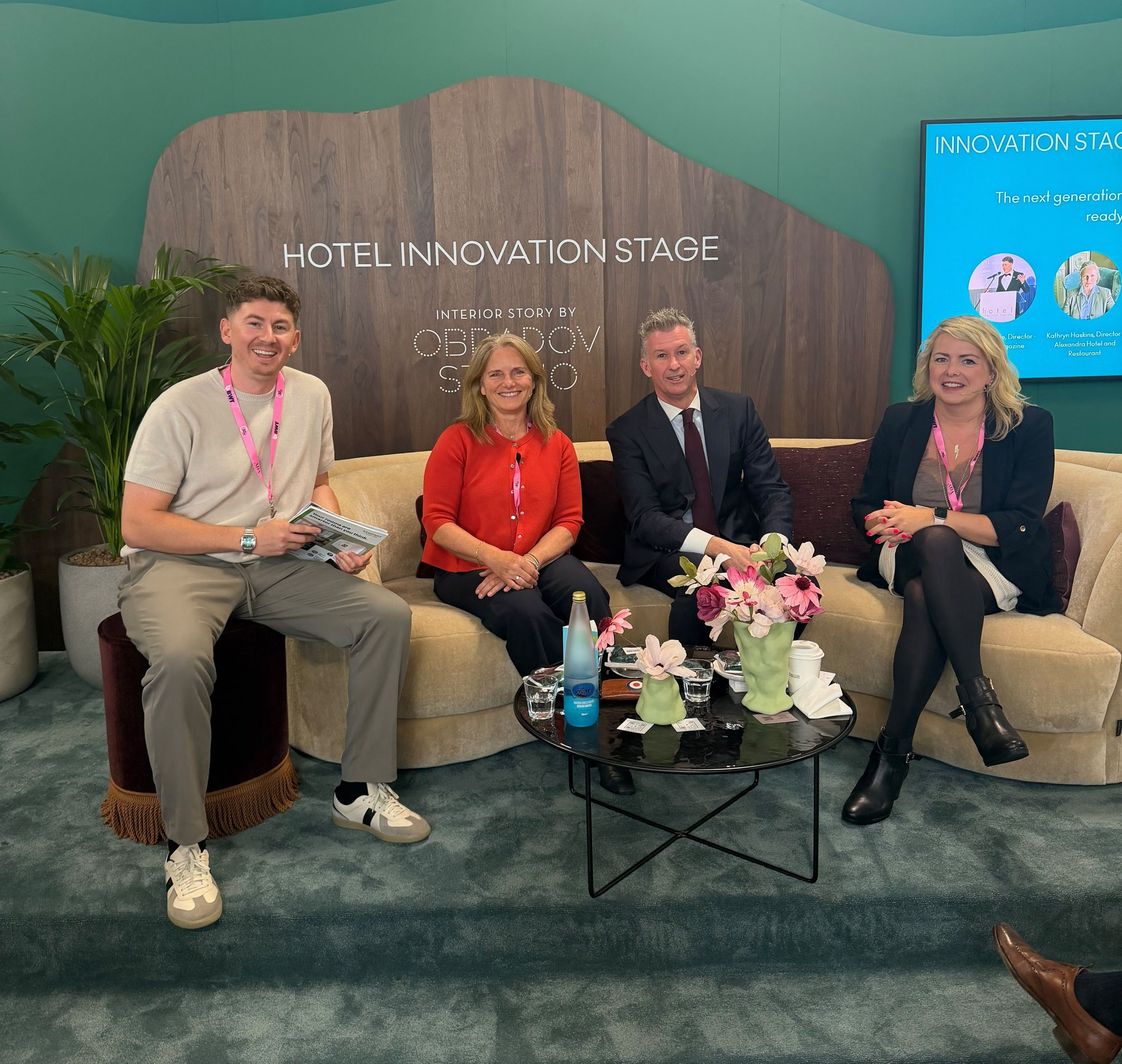
That was a key message from ‘The next generation of travellers is here: Are you ready?’, a panel discussion on the Innovation Stage, in partnership with eviivo and designed by Obradov Studio, at the Independent Hotel Show, in partnership with James Hallam Insurance Brokers.
Moderated by Declan Wale, Director of Hotel magazine, the session brought together Kathryn Haskins, Director of Alexandra Hotel and Restaurant; Nuno César de Sá, General Manager of Grantley Hall; and Rose Webb, Marketing Director of Clermont Hotel Group. Drawing on very different properties and audiences, the panellists explored how hotels can stay relevant while protecting the qualities their guests value most.
Understand why guests choose you
For Haskins, understanding the guest means recognising the appeal of a peaceful stay by the sea. At Alexandra Hotel and Restaurant in Lyme Regis, repeat visitors and generations of returning families value comfort, thoughtful food and attentive care.
Adding more activities or making the restaurant more elaborate does not necessarily improve that experience. Haskins described how guests had questioned a move towards more intricate dining, explaining that they could find that elsewhere. What they wanted from the Alexandra was somewhere to relax.
That feedback helps guide decisions across the property, including managing the number of non-resident visitors to preserve the atmosphere for those staying.
At Grantley Hall, expectations take a different form. César de Sá described guests seeking highly individual experiences, with the hotel’s team challenged to create something they could not easily find elsewhere. His example of arranging a cycling experience with an Olympic medallist illustrated how understanding a personal interest can become the starting point for a memorable stay.
The shared lesson was clear: investment in the guest experience should begin with the reasons people book.
Give your hotel a clear personality
Webb argued that a portfolio of hotels creates opportunities for each property to express a distinctive identity.
Within Clermont Hotel Group, heritage, music and location provide different foundations for storytelling and experiences. She highlighted the contrast between The Royal Horseguards’ historical character and The Cumberland’s musical identity, where guests can request a Fender guitar in their room.
These differences help guests choose an experience that suits them, while giving marketing teams a clearer story to tell.
“Stop trying to be everything to everyone,” Webb advised.
For independent hoteliers, that means having confidence in the property’s strengths and allowing them to shape both the promise made before booking and the experience delivered on arrival.
Let guests choose how they interact
Technology and personal service both have a place, but the balance depends on the guest and the occasion.
A tired business traveller may appreciate a quick, automated check-in. Someone arriving for a leisurely break may welcome a conversation, a cup of tea and time to settle in.
César de Sá emphasised choice, while Webb described how guest research had revealed different preferences for interaction with front-of-house teams. The challenge is to recognise those preferences and respond appropriately.
Haskins also highlighted the impact of natural, friendly communication. A warm welcome and a member of staff who anticipates a need can become a defining part of the stay.
Delivering that consistently requires employees who enjoy hospitality, alongside practical training that gives them the confidence to do their jobs well.
Authentic guest experiences shape discovery
TikTok, Instagram and AI are changing how travellers explore their options, but the discussion highlighted the continuing importance of reviews and recommendations.
Webb described guests looking beyond room specifications to understand a hotel’s atmosphere. Search insights had even shown people asking AI what a property’s “vibe” was like.
Guest videos, reviews and personal accounts can help answer those questions in ways that advertising alone cannot. For international visitors, hearing from someone with a similar background can make an unfamiliar destination feel more accessible.
Webb also highlighted the value of thoughtful review responses. Even when feedback is imperfect, a response that sounds personal and reflects the brand gives a hotel another opportunity to demonstrate its approach to hospitality.
For Haskins, word of mouth remains particularly powerful: the people who leave happy become advocates for the property.
Listen, experiment and keep improving
The panellists encouraged hoteliers to combine data with observation and frontline feedback when deciding where to invest.
Booking patterns, focus groups and conversations with guests can reveal opportunities to adapt menus, introduce experiences or improve service. At Grantley Hall, César de Sá described a proactive approach to identifying concerns during a stay, allowing the team to respond before departure.
Webb also cautioned against judging every new experience solely by immediate sales. A package may attract relatively few bookings while still helping potential guests understand the hotel’s personality and what it offers.
Experimentation therefore needs both commercial scrutiny and room to develop. Hotels should be prepared to adjust ideas, listen to their teams and question processes that no longer serve the guest.
Across the discussion, readiness for the next generation came back to knowing the audience, delivering a distinctive experience and giving staff the confidence to make it personal. As discovery channels and expectations evolve, those qualities give hotels a strong foundation for their next decisions.
)
)
)
)
)
)
)
)
)
)
)
)
)
)
)
)
)
)
)
)
)
)
)
)
)
)
)
)
)
)
)
)
)
)
)
)
)
)
)
)
)
)
)
)