)

Meet the design partner: Obradov Studio
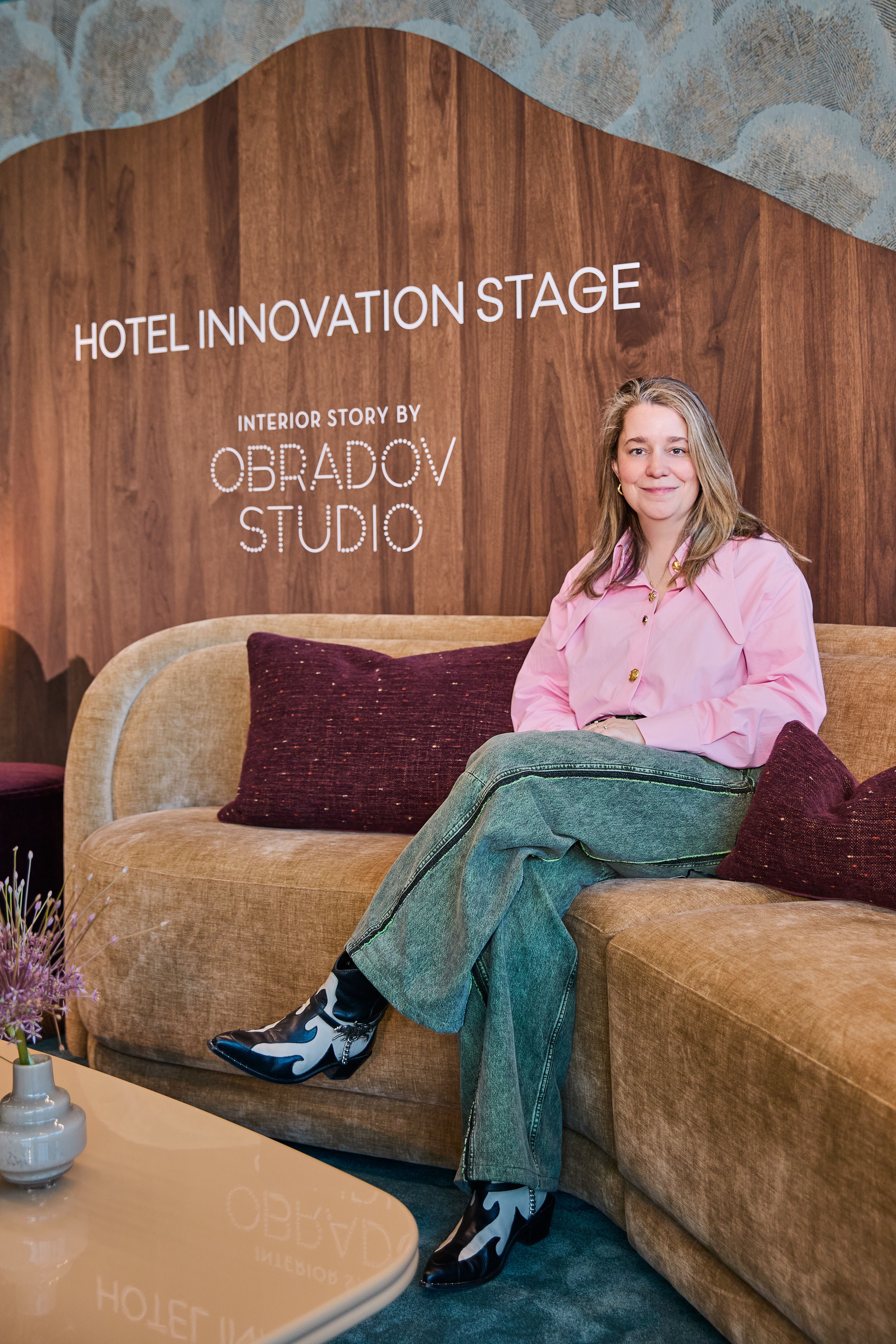
The Independent Hotel Show catches up with Jelena Obradov, Creative Director & Founder of Obradov Studio, to learn more about the design for this year's Innovation Stage.
What makes Obradov Studio unique?
I believe the combination of my background in marketing and interior design allows for a process where I focus a lot of attention on getting to know the client, brand or guest, then weave that into a fitting narrative (hence, interior stories). From there I develop a layered design.
In terms of a signature, people have said that although my projects differ in style, the attention to detail is visible across the board. I put a great deal of thought into joinery, in a hotel that might be a bespoke bar or the joinery in a room, designed as a piece of furniture rather than standard fit-out. I'm looking to create spaces where the longer you stay, the more details you notice.
How do you start a project?
First, by understanding the space, the user, and the client. What's already there, and where do we need to take it? My main question is always: how do you want guests to feel when they walk in? That tells me far more than a list of requirements. From there the concept starts to take shape, aligned with the architecture and the people who'll use it.
What do you enjoy about designing hospitality spaces?
Creating a world that fits the space, the brand and the guests. I look at the whole picture: what does this place and brand stand for, how do we translate that spatially, and how do we make guests feel it the moment they walk in? I love putting those puzzle pieces together.
Can you tell us about the concept for the Innovation Stage?
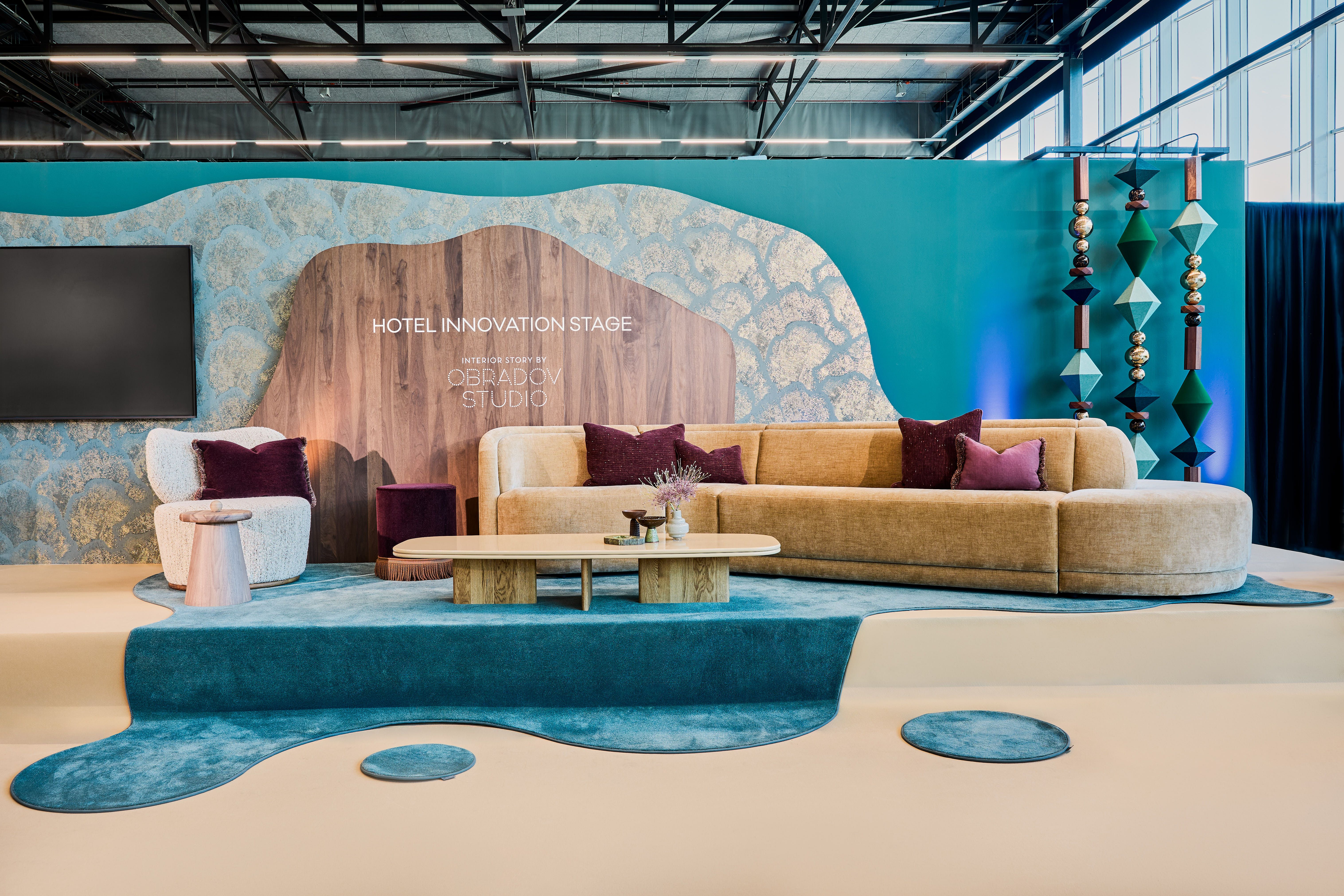
I wanted to combine stage design with the way I would design a hotel lobby or speakeasy. Stage design revolves around sightlines and the experience of a space from a distance, while hospitality design is about atmosphere from every angle and an intimate spatial experience. The idea is that the stage feels almost like opening a jewellery box, in deep green tones, with layers in both the walls and the materials. The result is a theatrical stage that invites the audience to briefly step into another setting during the event.
Are there any other supplier partners for this design you’d like to highlight?
Yes! It was great collaborating with Decospan to create the organic shaped backwall with their walnut veneer and it was amazing how Van Besouw managed to create our carpet design, it’s organic shaped, but also flows off the stage! Artimo’s burgundy velvet curtain then adds a bit of mystery and extra warmth.
What were some of the challenges compared to other design projects?
A stage isn't a space you experience from all sides, you're really designing one face of it. The challenge was giving it depth and warmth anyway, so it felt like a place rather than a set. That came down to layering and shaping the wall panels and carpet first, so the space held on its own before any furniture went in. Getting that balance right took some time.
This is quite a unique design project for the Independent Hotel Show brand, starting as a stage in Amsterdam and now being transported to London. How did the idea come about?
After Amsterdam, the IHS team was thrilled with the stage and the response from guests, so they asked us to bring it to London. That was a real compliment. It also meant we didn't have to throw away everything that went into the build, which is rare in the trade show world and something we care about. The London stage footprint is a bit different and we're working with new local suppliers, but that's the fun part: tweaking the design for a new audience and space.
Finally, the theme for the Independent Hotel Show London 2026 is ‘Shaping Tomorrow’ – do you have any predictions for the future of hotel design?
With the digital revolution we're in and all the visual stimulation online, I think trends are running out even faster than before. Hoteliers can't risk falling for 'sameness', the same boutique look in every city. Staying true to your hotel's story and your location is the clearest differentiator: local makers, local materials, a story you cannot lift and drop somewhere else. Spaces that don’t just look good online, but deliver on the experience offline. This remains a mix of spatial design, but also lighting, scent, sound and above all service.
)
)
)
)
)
)
)
)
)
)
)
)
)
)
)
)
)
)
)
)
)
)
)
)
)
)
)
)
)
)
)
)
)
)
)
)
)
)
)
)
)
)
)