)

Inside The Shepherd Mayfair: Intimacy, identity and elevated experiences in London’s most competitive postcode
The Independent Hotel Show sits down with Timothy Shepherd, Founder of Shepherd&, to explore the design of The Shepherd Mayfair, opening in summer 2026, and what the project reveals about intuitive luxury, spatial efficiency and designing distinctive boutique hotels in one of the world’s most competitive markets.
In a neighbourhood defined by legacy names and global luxury brands, launching a new hotel in Mayfair demands more than polished interiors and premium finishes. It requires a clear sense of identity and point of difference.
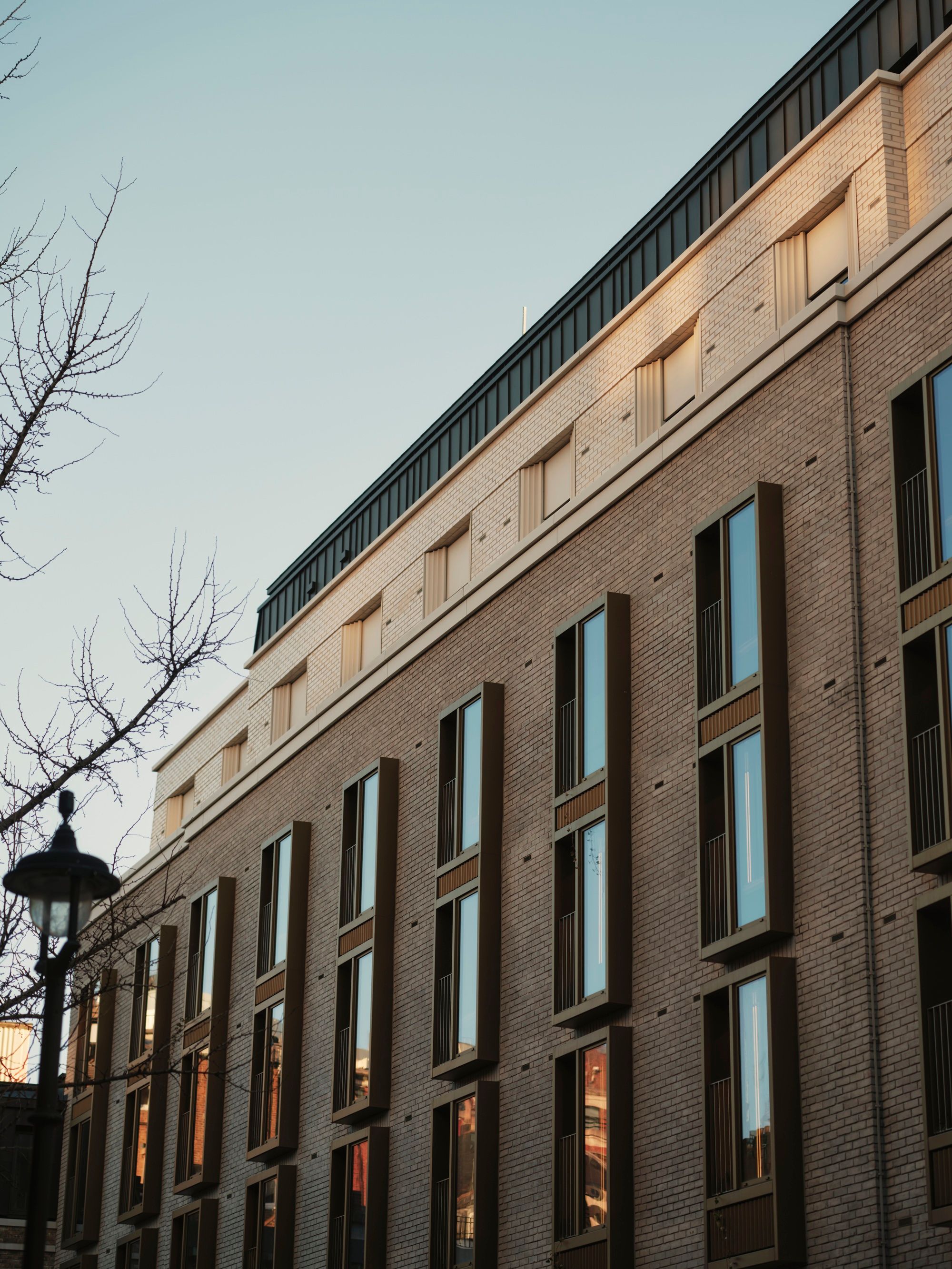
The Shepherd Mayfair, set to open in summer 2026 in historic Shepherd Market, brings 82 rooms, multiple F&B concepts and a narrative-led design approach to one of London’s most saturated hotel markets.
The Independent Hotel Show meets with Timothy Shepherd, Founder of Shepherd&, to discuss the challenge of bringing this new hotel to life in the heart of London. Timothy led the project from its inception at Buckley Gray Yeoman ID before progressing it through his own practice.
Designing within constraints
The project began with a complex brief: an existing building, a tight footprint and a requirement to retain as much of the structure as possible. “It’s an interesting, difficult, tricky little plot that a few people have been trying to unlock,” Shepherd explains.
Timothy Shepherd, whilst Managing Director at Buckley Gray Yeoman ID, was brought on board by Chris Evans of Hamilton Hotel Partners to untangle this complex site and bring his unique design perspective to the project.
Rather than seeing the constraints as limitations, Shepherd reframed them as a creative opportunity. “It became less about grand Park Lane and more about intimate Mayfair. That’s where the initial seed came from.”
That seed evolved into a core concept that underpins the entire hotel: a reinterpretation of the Mayfair Mansions. “We settled on the idea of recreating one of the Mayfair mansions,” he says. “The purpose of that Mayfair mansion was to have the veneer of hospitality, but in the background you’ve got the business side of Mayfair.”
For hoteliers and designers, this is a familiar tension: balancing front-of-house theatre with back-of-house efficiency, and understanding which spaces to sacrifice or prioritise.
Narrative as a commercial tool
The word ‘storytelling’ is often overused in hospitality design, and Shepherd is pragmatic about its role. “Storytelling…when was it not storytelling? That’s been around for thousands of years.”
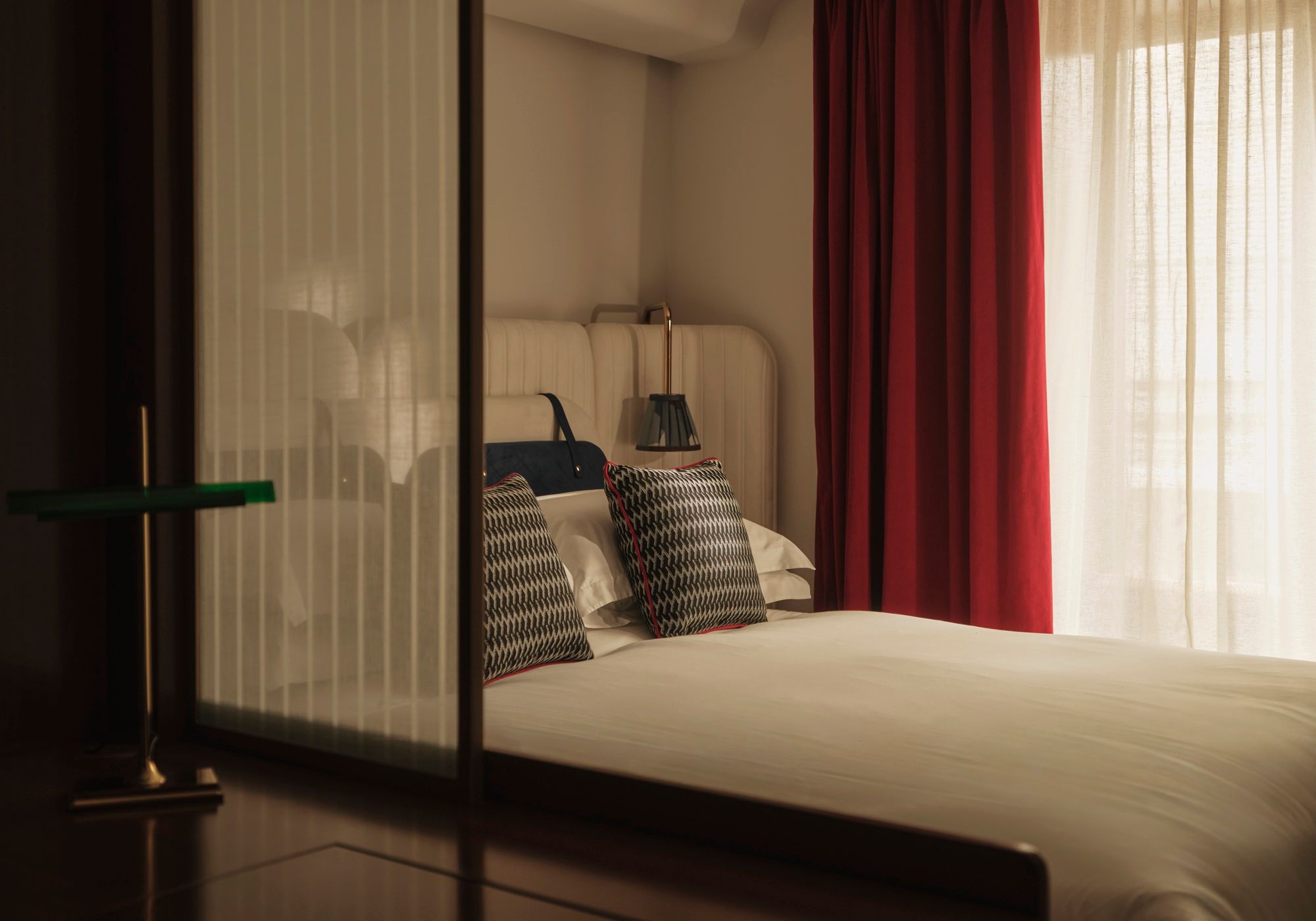
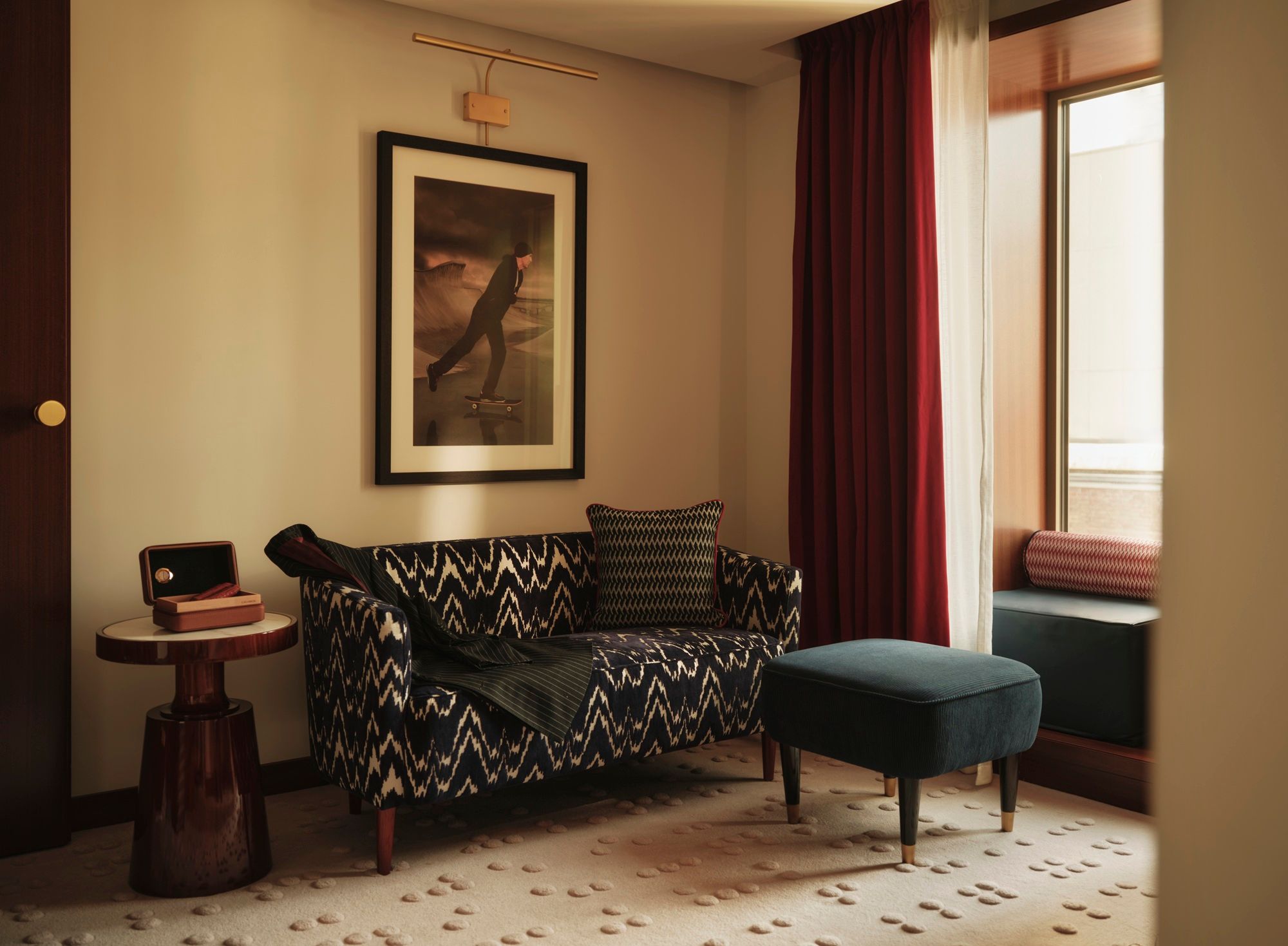
At The Shepherd Mayfair, narrative is embedded in the fabric of the building rather than layered on top. References to Mayfair’s history, from the area's long-standing association with British intelligence services to local characters, appear in subtle design gestures, including coded artwork and tactile elements like braille-inspired carpets.
“Mayfair is a society with an underbelly of secrecy and misadventure,” explains Shepherd. “MI5 were previously down at the bottom of Curzon Street, and the old Down Street Tube Station was used as a bunker by Churchill and the war cabinet.”
In a market where differentiation is critical, Shepherd’s view is clear: “There’s not an awful lot that’s copy and paste in Mayfair; you’re either the big hotel or you have your identity and that’s what makes you stand out.”
Space, efficiency and guest behaviour
With 82 keys across a constrained site, spatial efficiency became a defining principle. The hotel features an unusually high number of unique room styles, driven by a deliberate choice to maximise usable space.
“We’ve ended up with 37 rooms styles,” Shepherd notes. “We’ve embraced every inch of space. Nothing is wasted.”
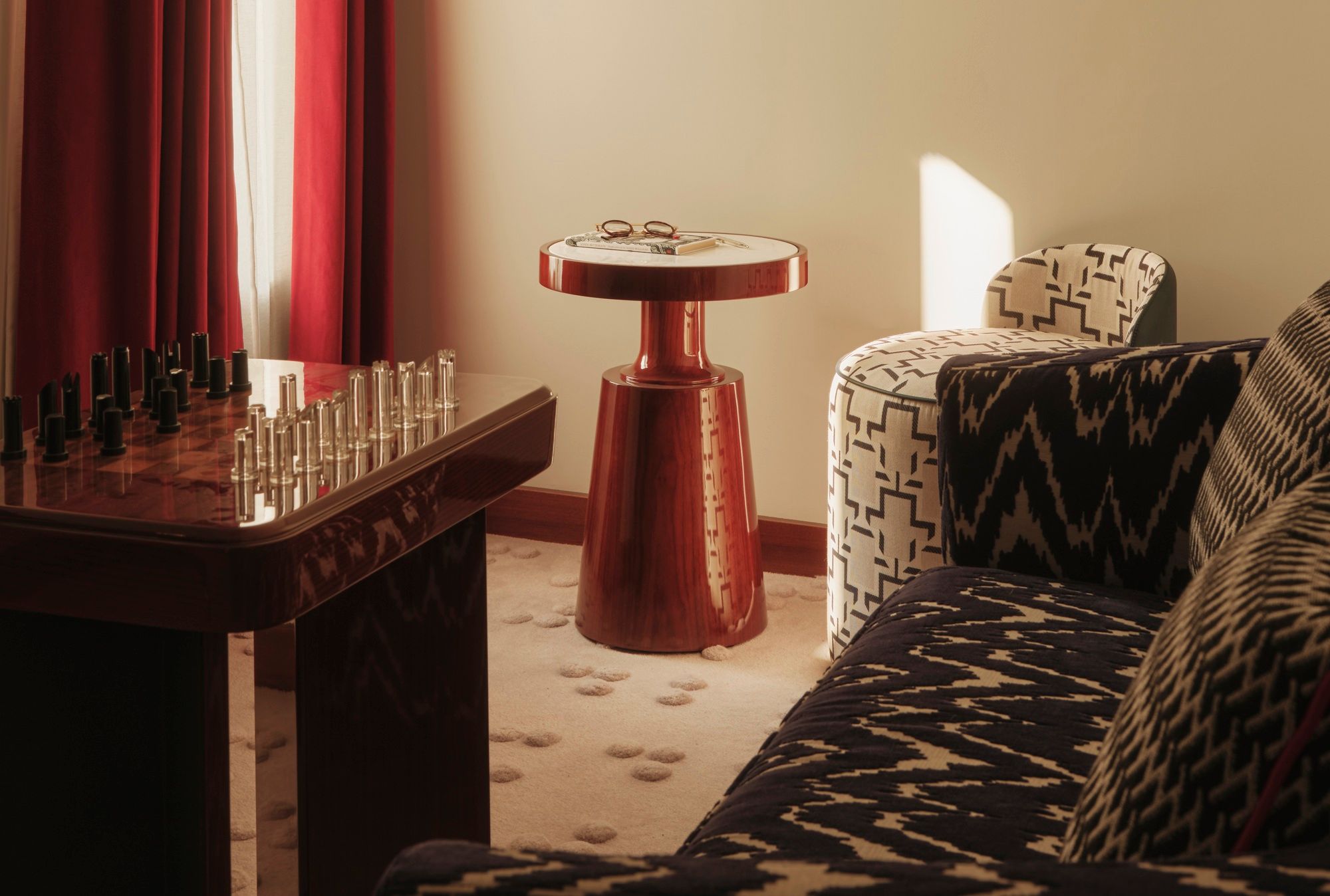
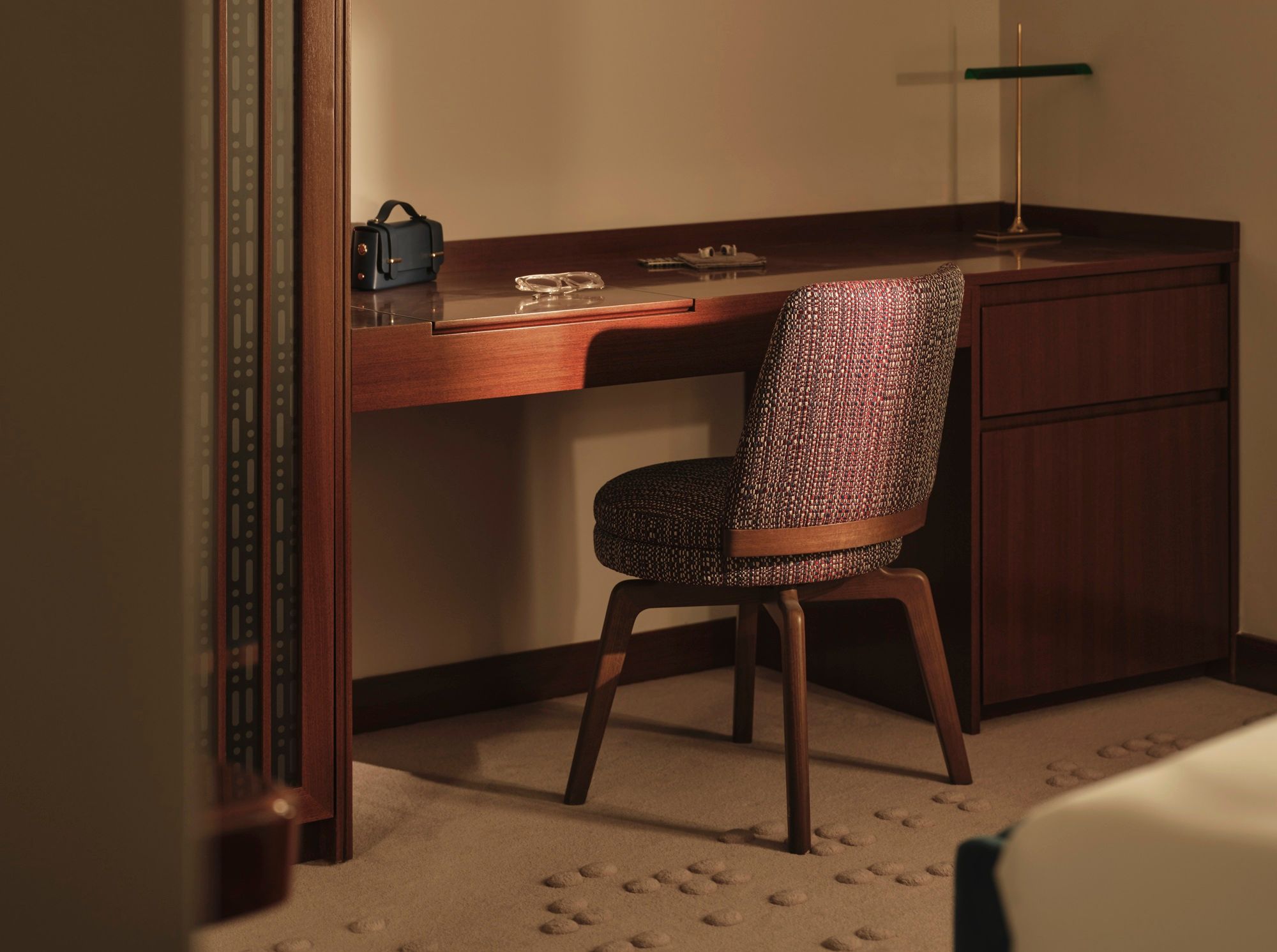
This focus on intentional, considered design is visible throughout the rooms. Furniture is multifunctional: desks convert into dressing tables, and console tables become chessboards. Storage is integrated and prioritised, avoiding the common pitfall of sacrificing wardrobe space for in-room amenities.
The now-signature chess table encapsulates this thinking. “Rather than just having a table to put room service on, we thought we’d give it an identity,” Shepherd says. “Everything in the room is the same, in that the space has got another life.”
In urban hotels where space is at a premium, these multifunctional aspects give guests more freedom and flexibility to have unique experiences that suit the type of traveller they are.
Intuitive luxury: back to basics
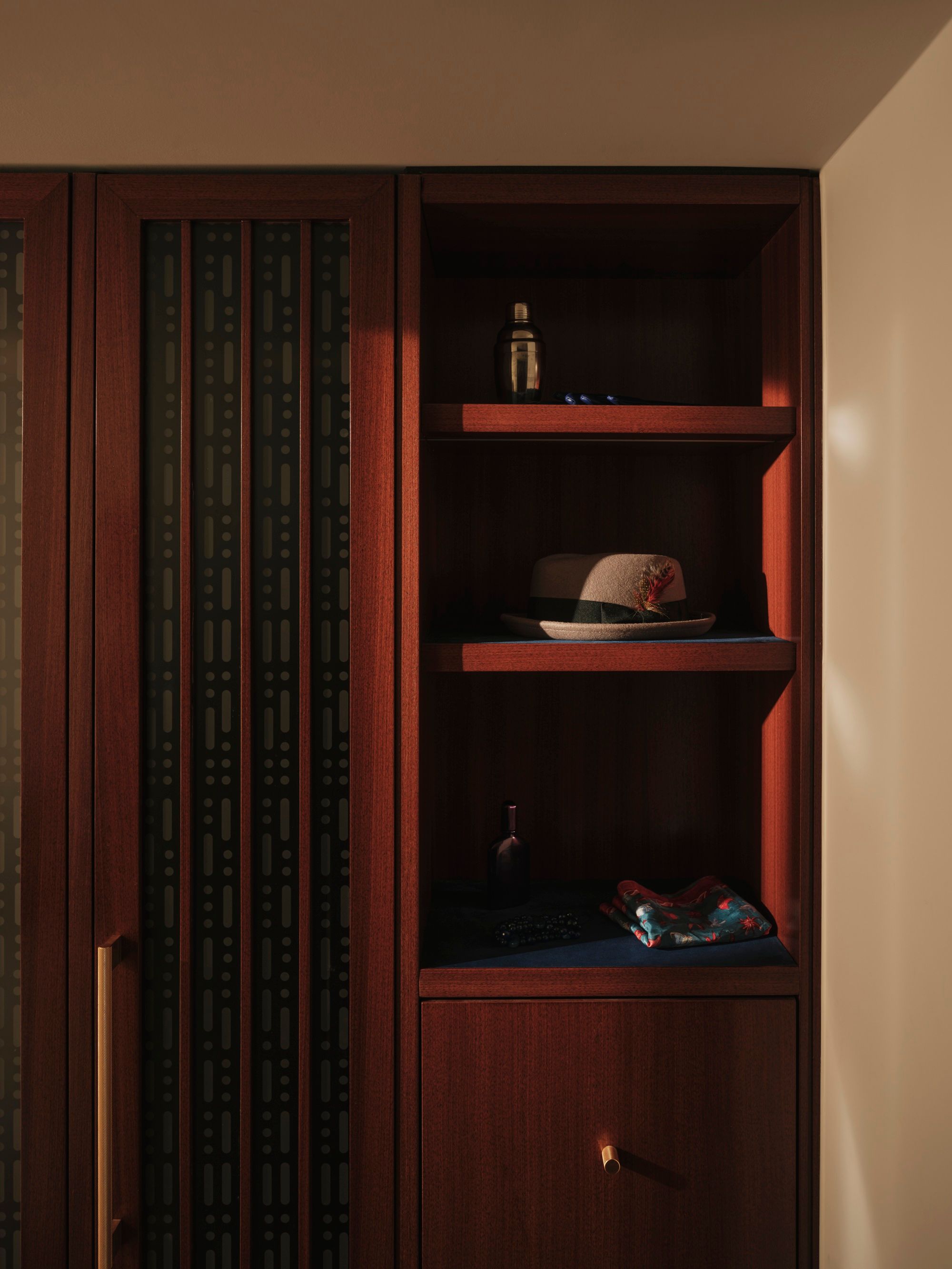
If there is a unifying principle in Shepherd’s approach, it is simplicity. In an era of increasingly tech-heavy guest rooms, he advocates for intuitive design over complexity.
“You don’t want the room to fight you,” he says. “You can choose how much technology you use. It’s not about showing off tech but it’s there if you need it.”
This extends to the fundamentals of guest experience. “People want a good bed and a good shower as a starting point,” he adds. “Then you get into things like great lighting, and having a place for everything. It's easy to forget to get that right at the beginning of the design process, and then you spend your time fixing it.”
F&B as a driver of community
Beyond the guest rooms, The Shepherd Mayfair places an emphasis on F&B as a point of differentiation. The hotel will feature three distinct concepts: an all-day restaurant, a café-style lounge and a hidden cocktail bar.
Crucially, these spaces are designed not just for guests but for the surrounding community. “It needs to be part of the community; it can’t just be the hotel,” Shepherd says.
This philosophy is reflected in the physical design. Street-level access, outdoor seating and a reimagined arcade connecting Stanhope Row to Shepherd Market all contribute to a porous, welcoming environment.
“We’ve now made it our lobby outside,” Shepherd explains. “And I think that really has connected with community. It used to be a very dark space, sometimes not even a safe place to walk through, according to local residents. Now, rather than having an area they avoid at night, people will be able to walk through with confidence, because they will be greeted by someone at the hotel or restaurant entrance, which sit opposite each other across that space.”
As guests enter the hotel, they will be in an open plan space leading directly to the patisserie and cafe, which in the afternoon and evening converts to a bar. The restaurant, in addition to service its function to guests, had to sit comfortably within the Mayfair restaurant scene and provide something new for the community surrounding the hotel, including people walking through from popular Shepherd Market.
Rethinking luxury
Shepherd is candid about the shifting definition of luxury. “The biggest issue you have with the word ‘luxury’ is its overuse and misdelivery,” he says. “I prefer to talk about elevated experiences.”
At The Shepherd Mayfair, this translates into a focus on comfort, wellness and material quality rather than overt opulence. Air quality, lighting and acoustics are prioritised alongside aesthetics, with rooms designed for guests to “sleep better, wake up better, rest better”.
Sustainability also plays a role, particularly in the selection of materials and the emphasis on longevity. “The ability to reupholster, to refinish…it’s better on the P&L, let alone from a sustainability perspective,” Shepherd notes. “Interior designers have been recycling furniture for centuries – reusing and repurposing is inherent to the discipline.
“We’re seeing hoteliers focus more on product longevity. That comes from working closely with designers and the supply chain to get the right product at the right price.”
A model for boutique development
In a market as competitive as Mayfair, The Shepherd Mayfair offers a clear case study in how boutique hotels can differentiate through design. It demonstrates the value of narrative, the importance of spatial efficiency and the enduring relevance of intuitive guest experience.
Shepherd returns to a simple benchmark for success: “Ultimately, it’s a guest opening a door of a room putting the bag down, and going, ‘I’m absolutely exhausted.’”
“That’s what you’re going to get judged by,” he says.
For hoteliers and designers alike, it’s a reminder that even the most ambitious projects are measured in moments, not concepts.
Follow the latest news and developments from The Shepherd Mayfair at theshepherdmayfair.com, and on Instagram @theshepherdmayfair.
)
)
)
)
)
)
)
)
)
)
)
)
)
)
)
)
)
)
)
)
)
)
)
)
)
)
)
)
)
)
)
)
)
)
)
)
)
)
)
)
)
)
)