)

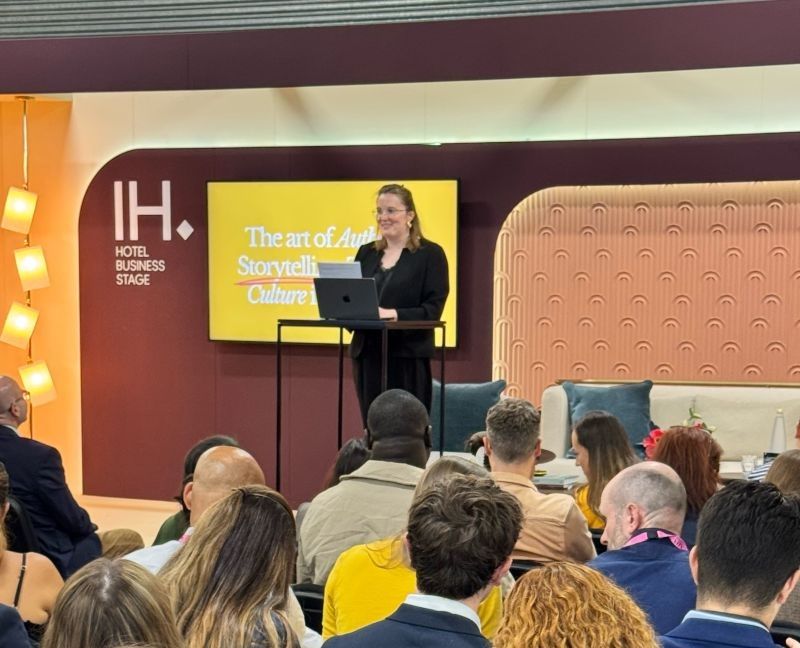
The art of authentic storytelling: Turning culture into content
Tiffany Black, Creative Strategist at Scrumptious, explores how independent hotels can use employee stories, everyday details and simple video content to communicate workplace culture and attract the right talent.
What is it really like to work at your hotel? For prospective employees, the answer can matter as much as the job description, salary or benefits package.
In her Hotel Business Stage session at Independent Hotel Show, Tiffany Black, Creative Strategist at Scrumptious, explored how hospitality businesses can turn everyday workplace experiences into compelling employer-brand content. Her message was practical: start with your people, listen closely and let the details reveal your culture.
The Hotel Business Stage is sponsored by eviivo and designed by Merav Bustan Design.
Help candidates picture themselves in your business
Employer branding should help candidates answer a fundamental question: can I see myself working here?
A careers page might explain the roles available and the benefits on offer, but it can be harder to convey the experience of joining a team. How do colleagues support each other during a challenging shift? What makes a good day? Why do people stay?
These are questions that employee stories can help answer. They give prospective applicants a sense of the people, relationships and working environment behind the vacancy.
Candidates also encounter a business across multiple channels, from its website and social media to reviews and the experiences shared by current and former employees. Each contributes to their understanding of its culture.
Find the story in the small details
Broad statements about teamwork, development and belonging are familiar territory in recruitment content. Specific observations can make those messages more meaningful.
An employee describing the support they received when taking on a new responsibility tells candidates something tangible about career development. A former colleague saying they miss the team can reveal the strength of workplace relationships.
Tiffany highlighted how employee interviews can uncover these details, bringing out aspects of the employee value proposition — the reasons someone would choose to join and stay with a business — that formal messaging can overlook.
For hospitality employers, these stories can also challenge assumptions about the industry. Professional training, long service, career progression and pride in looking after others all offer opportunities to show what makes a workplace distinctive.
Give employees room to tell their own stories
Employees are well placed to explain the realities of working in hospitality. Their perspectives can bring depth to recruitment content, particularly when they have space to describe experiences in their own words.
The starting point does not need to be a lengthy questionnaire. One open-ended question can uncover an unexpected story.
Tiffany’s suggested challenge was to ask an employee what surprised them most about working for the business. Their answer might reveal a source of support, an opportunity or an everyday experience that the employer had never considered highlighting.
The value lies in listening for what matters to that person, then exploring the experience behind their answer.
Start small with video
Effective storytelling does not require a large production budget. Tiffany discussed the potential of short, vertical, behind-the-scenes videos to share workplace experiences in formats audiences already use.
A phone and microphone can provide a practical starting point, while recording tools can help make interviews easier to capture and edit.
Putting participants at ease is essential. A relaxed conversation gives employees room to reflect, while confidence can grow as they see the finished content and understand how their contribution will be used.
For a hotel, an initial video could focus on one employee’s career journey, a moment of teamwork or something they enjoy about their role.
Make recruitment more informed
Clear communication about workplace culture can help candidates recognise whether a business feels right for them. It can also help those whose expectations differ decide earlier in the process.
That creates the potential for better-aligned applications and more useful recruitment conversations, with candidates arriving with a clearer understanding of the workplace they hope to join.
For independent hotels, the practical takeaway is to begin with one person and one question. The stories that make a business distinctive may already be there, waiting to be heard.
)
)
)
)
)
)
)
)
)
)
)
)
)
)
)
)
)
)
)
)
)
)
)
)
)
)
)
)
)
)
)
)
)
)
)
)
)
)
)
)
)
)
)
)